New tires can make a car feel better immediately. Steering feels tighter, road noise drops, and wet traction improves. That quick improvement is exactly why it’s smart to look at the brakes at the same appointment. Tires and brakes work as a team, and if the brakes are worn unevenly or starting to drag, they can shorten tire life and make the car feel unstable, even with brand-new rubber.
A brake inspection during tire replacement is a practical way to catch problems while the car is already in the air.
Why Tires And Brakes Are Linked More Than You Think
Your tires are the grip, but your brakes are the control. Every stop turns kinetic energy into heat at the pads and rotors, and the tire has to hold traction while that happens. If the brakes are not working evenly, the tires can’t do their job properly. You may notice longer stopping distances, pulling during braking, or a steering wheel shake that feels like a tire issue.
Brakes also influence how tires wear. A sticking caliper or dragging pad can create extra heat and uneven resistance at one wheel. That can cause a tire to wear faster or develop a wear pattern that makes the car noisy and less stable. A brake check helps you protect your new tires from problems that started before the tires were installed.
New Tires Can Hide Brake Problems For A While
Fresh tires often mask symptoms that are easier to feel on worn tires. If your old tires were noisy or uneven, you might not notice a mild brake pulsation or a slight pull because the tire issues were louder. Once new tires go on, the car feels better, so you assume everything else is fine.
Then a few weeks later you notice a squeak, a vibration, or a pull you swear wasn’t there before. In many cases it was there, but it was buried under tire noise and worn tread. A quick inspection at the tire appointment can prevent that frustrating cycle.
What A Brake Inspection Covers During A Tire Visit
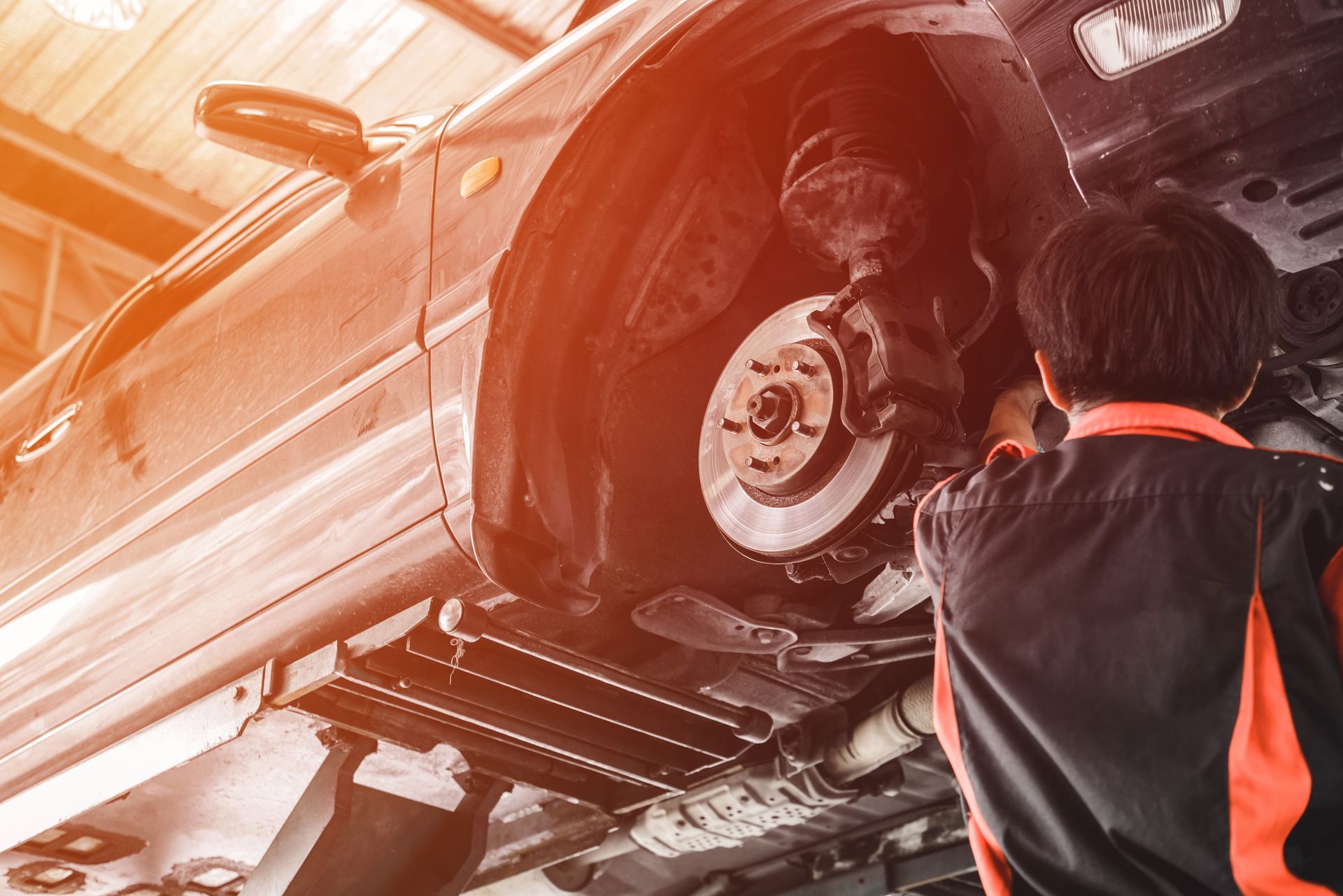
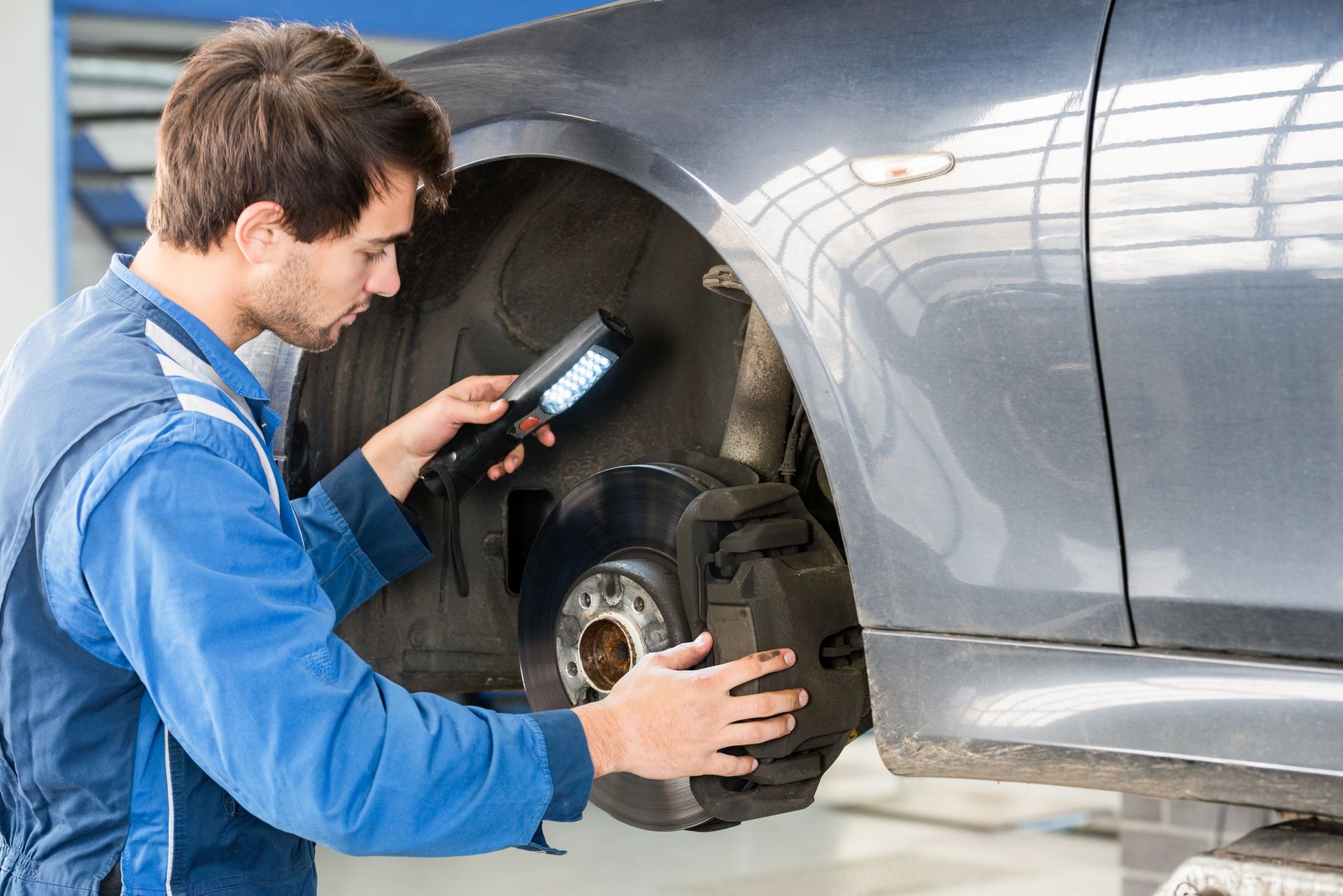
A good brake inspection is more than a glance at the wheel. With the car already lifted, it’s easy to check the things that actually determine braking health. We look at pad thickness, rotor condition, and whether the braking hardware is moving the way it should.
We also check for early clues like uneven pad wear side-to-side, which can suggest caliper slide issues. If the brakes are close to due, this is the right time to plan service so you’re not surprised later. It also helps you avoid running new tires through the stress of dragging brakes or uneven stopping.
Brake Wear Patterns That Affect Tire Life
Brake wear is not just about how thin the pads are. It’s also about whether both sides of the axle are wearing evenly. If one inner pad is much thinner than the outer pad, the caliper may be sticking. If one side is wearing faster than the other, the vehicle may be braking unevenly, which can create pulling and uneven tire wear.
A dragging brake can also heat a tire more than normal. Heat speeds up rubber wear and can worsen feathering and cupping patterns. Those patterns can get noisy fast, and people often blame the tire brand when the real cause is uneven braking resistance.
Signs Drivers Often Mistake For Tire Problems
A lot of brake symptoms feel like tire or alignment complaints. That’s why pairing the checks makes sense. If you replace tires and skip the brakes, you might still feel the same problem and assume the new tires weren’t worth it.
Here are common brake-related symptoms that drivers often confuse with tire issues:
- Steering wheel shake that happens mainly while braking
- A pull that becomes stronger when you press the brake pedal
- A grinding or scraping sound at low speed stops
- A vibration that comes and goes after a few stops in traffic
If you notice any of these, a brake inspection is more than a nice-to-have. It can save you from chasing the wrong repair.
Why It’s Efficient To Do Both At Once
There’s a practical reason shops recommend it. The vehicle is already lifted, wheels are already coming off, and the technician is already looking at wear items. That makes brake checks faster and more accurate. It also reduces the chance of needing a second appointment immediately after your tire visit.
There’s also planning value. If your brakes are at 30 percent left, you can schedule service on your terms rather than waiting until the pads are squealing. This is one of those moments when regular maintenance thinking pays off, turning repairs into planning rather than emergencies.
What If Your Brakes Look Fine Today?
Even if your brakes are healthy, an inspection still helps. It gives you a baseline for pad life and rotor condition, and it can catch early hardware issues before they become noise or uneven wear. It also confirms whether your braking system is wearing normally after the new tires are installed.
If you drive in heavy traffic, tow, or commute on hilly routes, brake wear can change faster than you expect. A quick check now makes the next one simpler, because you’ll know what normal looks like on your vehicle.
Get Brake Inspection In Charlotte, NC, With Gibbon Tire and Auto
Gibbon Tire and Auto in Charlotte, NC, can inspect your brakes while your new tires are being installed and flag any wear or hardware issues that could affect stopping and tire life.
Schedule your visit and protect your new tires from avoidable brake wear.