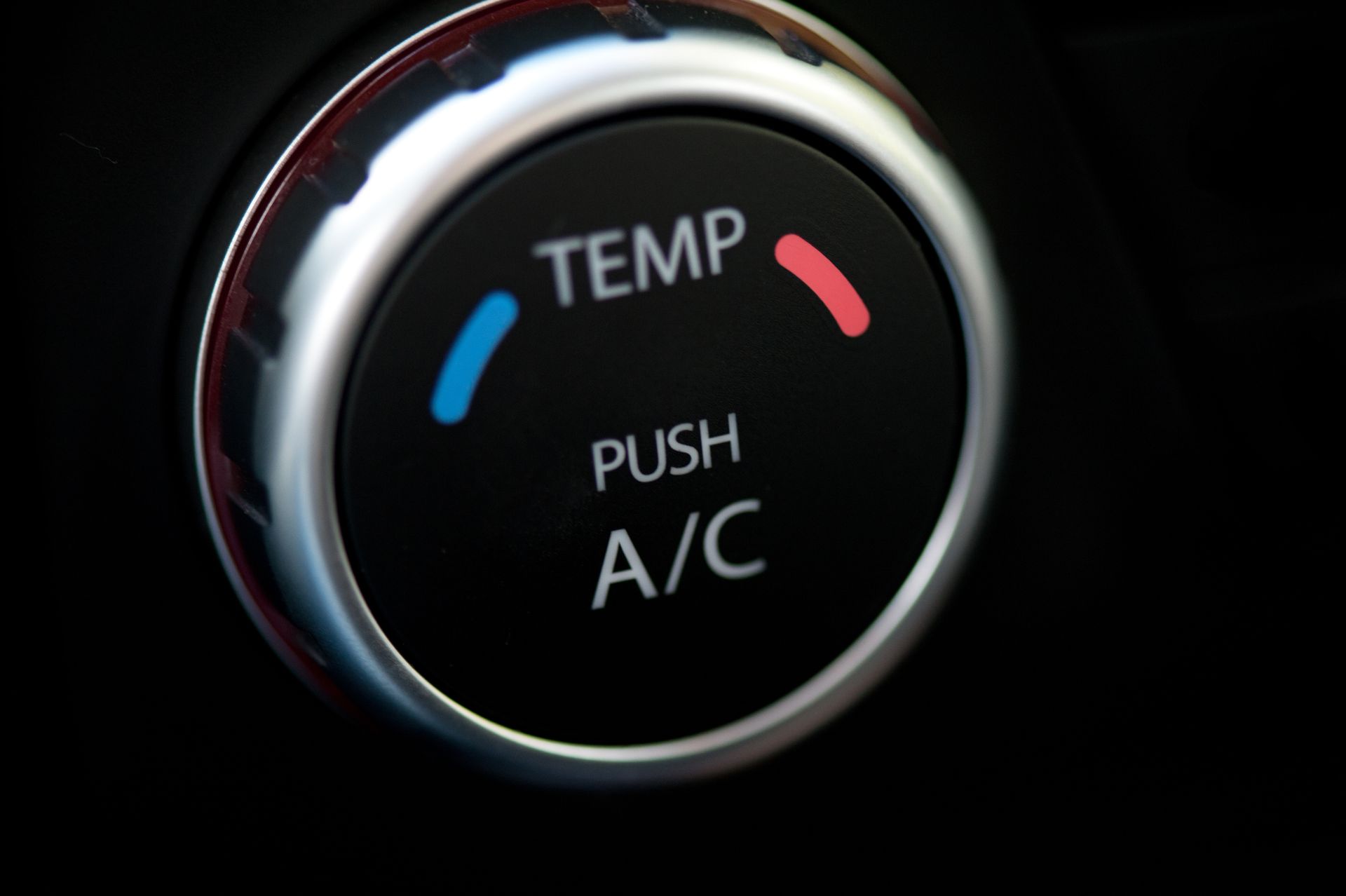
A car’s A/C can fail in more than one way. Sometimes it blows warm air from the start. Other times, it cools for a few minutes, then fades. You might hear a noise, smell something strange, or notice that the air from the vents feels weak even though the fan is turned up.
That is why A/C repair should start with testing, not assumptions. A system that is not cooling could have a leak, an electrical issue, a compressor problem, poor airflow, or a control issue inside the cabin. Knowing the most common causes can help you understand what the shop is looking for.
1. Low Refrigerant Or A Refrigerant Leak
Low refrigerant is one of the most common reasons a car’s A/C stops working. Refrigerant is the fluid that removes heat from the cabin. If the level drops too low, the system cannot cool the air properly.
Refrigerant does not disappear on its own. If the system is low, there is likely a leak somewhere in the hoses, seals, condenser, evaporator, compressor, or service ports. Adding refrigerant without finding the leak can make the A/C work for a short time, but the same problem usually returns. A proper inspection helps find the leak before more parts are affected.
2. A Weak Or Failing Compressor
The compressor is the heart of the A/C system. It moves refrigerant through the system and helps create the pressure needed for cooling. When the compressor gets weak, the vents may blow cool air only part of the time, or the air may never get cold enough.
Compressor problems can also cause clicking, grinding, squealing, or an A/C that turns on and off too much. Low refrigerant can damage the compressor because the refrigerant also helps carry oil through the system. If the compressor fails internally, debris can spread to other A/C components, making the repair more involved.
3. Condenser Trouble
The condenser, located near the front of the vehicle, helps remove heat from the refrigerant. Since it is exposed to road debris, bugs, dirt, and minor impacts, it can become restricted or damaged. A clogged or leaking condenser can keep the A/C from removing heat the way it should.
Condenser problems may show up more in traffic because airflow is lower when the vehicle is not moving fast. The A/C may feel better on the highway, then get warm at stoplights. That pattern can also involve cooling fans, so the condenser and fan operation should be checked together.
4. Cooling Fan Problems
A/C systems need airflow across the condenser. When the cooling fan fails, pressure can rise, and cooling performance can drop. You may notice the A/C works while driving, but struggles when parked or sitting in traffic.
A fan problem can be caused by a bad fan motor, relay, fuse, wiring issue, control module, or temperature sensor. Since modern vehicles use electrical controls to manage fan speed and operation, testing is important. Replacing the fan without checking the circuit can miss the actual cause.
5. Clogged Cabin Air Filter Or Weak Blower Motor
Sometimes the A/C system is cooling, but the air is not moving through the cabin well enough. A clogged cabin air filter can block airflow through the vents. Dust, pollen, leaves, and debris accumulate in the filter over time, and the driver may notice reduced airflow or musty odors.
A weak blower motor, bad resistor, faulty control switch, or blocked vent path can create similar symptoms. Regular maintenance should include checking the cabin air filter, as airflow has a big impact on comfort. Cold air does not help much if it barely reaches the seats.
6. Electrical Or Control System Problems
Modern A/C systems depend on sensors, switches, pressure readings, control modules, relays, fuses, blend doors, and wiring. A small fault in one of those areas can keep the compressor from turning on or stop the system from sending air where it should go.
Blend door problems can make the A/C blow warm air even when the refrigerant side is working. Pressure sensor problems can keep the compressor off as a safety measure. Wiring issues can create on-and-off symptoms that seem random. Electrical A/C problems require careful diagnostics because the failed part isn't always the most obvious one.
Why Quick Refills Are Not Always The Answer
Many drivers ask for an A/C recharge because the system is blowing warm air. Sometimes the system is low and needs refrigerant after the leak is repaired. Other times, the refrigerant level is not the main issue at all.
A quick refill can hide the problem for a short time. It can also leave unresolved leaks, compressor wear, electrical faults, or airflow problems. The better approach is to check pressures, look for leaks, confirm fan operation, test controls, and verify airflow. That gives the repair a real direction instead of hoping cold air comes back and stays.
Get Car A/C Repair In Charlotte, NC, With Gibbon Tire and Auto
If your A/C is blowing warm air, cooling weakly, making noise, or working only intermittently, Gibbon Tire and Auto in Charlotte, NC, can test the system and explain what needs repair.