Shocks and struts help keep each tire firmly connected to the road as the suspension moves. They control spring motion, limit body movement, and help the vehicle remain stable during braking, turning, acceleration, and travel over uneven pavement.
As these components wear, the change is often gradual. Drivers may adjust to extra bouncing, wider steering corrections, or a longer-feeling stop without realizing how much control has been lost. Worn shocks and struts do not simply reduce comfort. They can affect tire contact, alignment behavior, braking stability, and emergency handling.
What Shocks and Struts Actually Do
Coil springs support the vehicle’s weight and compress when a wheel travels over a bump. Without a shock absorber or strut to control that energy, the spring would continue moving up and down after the bump had passed.
Shocks and struts force hydraulic fluid through internal valves to slow suspension movement. A strut also serves as a structural suspension component and may help locate the wheel, support the spring, and provide a mounting point for the steering knuckle.
These components do not hold the entire vehicle off the ground by themselves. Their primary role is controlling movement. When damping weakens, the suspension reacts less precisely to driver input and changing road conditions.
How Wear Changes Steering Response
During a turn, the vehicle’s weight shifts toward the outside wheels. Serviceable shocks and struts control how quickly the body leans and help the tires maintain consistent contact with the pavement.
Worn units allow more body movement before the vehicle settles into the turn. The steering may feel delayed, loose, or less predictable. Drivers may need to make repeated corrections on highways, during crosswinds, or while traveling over uneven surfaces.
Common steering-related symptoms include:
- Excessive body lean in corners
- The front end floating over dips
- Repeated steering corrections
- Wandering at highway speeds
- A loose or unsettled feeling
- Steering changes during bumps
- Clunking near a strut mount
These symptoms can also come from tires, alignment, tie rods, control arm bushings, ball joints, or wheel bearings. Testing the complete steering and suspension system identifies which parts are creating the concern.
Why Braking Performance Can Suffer
Hard braking transfers vehicle weight toward the front axle. The front suspension compresses while the rear becomes lighter. Strong dampers control that movement and help all four tires maintain useful contact with the road.
When front struts are weak, the vehicle may dive excessively under braking. Worn rear shocks can make the rear tires less stable, especially on rough pavement. If a tire begins bouncing instead of following the road surface, its available braking grip can change from moment to moment.
The brake system may still produce full hydraulic pressure, but the tires cannot use that force effectively when suspension movement is uncontrolled. The vehicle may feel unstable, activate the antilock braking system more frequently, or require more distance to settle during a sudden stop.
Tire Wear and Road Contact
A worn shock or strut can allow the tire to bounce repeatedly after each road impact. Over time, that movement may create cupping or scalloped wear, with alternating high and low sections around the tread.
Once this wear pattern develops, replacing the suspension component will not restore the tire. The tire may continue producing noise and vibration until it is replaced. That is why early attention can prevent a suspension concern from becoming a tire expense.
Warning signs include:
- Choppy tread wear
- Repeated tire noise
- Vibration that changes with speed
- Uneven wear despite correct pressure
- Reduced traction on rough pavement
- A tire that loses contact over bumps
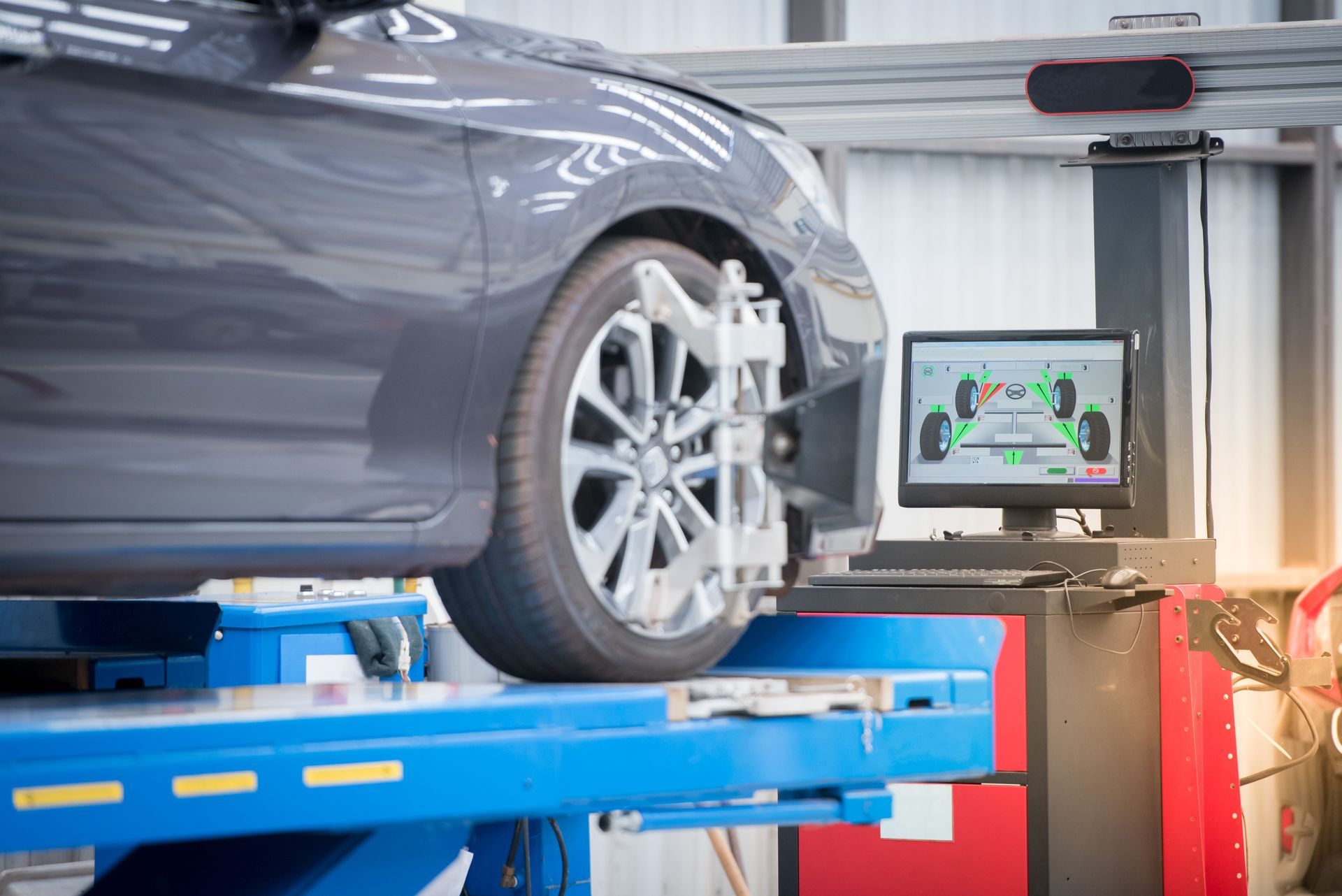
An alignment may be required after strut replacement, but alignment alone cannot correct uncontrolled suspension movement. Tires, wheels, steering joints, bushings, and ride height should all be evaluated.
Vehicle Stability During Emergency Maneuvers
Emergency steering places high demand on the suspension. The vehicle must transfer weight quickly from one side to the other while keeping the tires planted. Worn shocks and struts allow greater body roll and slower recovery after the first steering input.
This can make lane changes, obstacle avoidance, and sudden turns less predictable. A top-heavy SUV, van, or crossover may feel especially unsettled because its higher center of gravity creates greater weight transfer.
Electronic stability control can apply individual brakes and reduce engine power when it detects loss of control. These systems depend on the tires and suspension responding correctly. They cannot fully compensate for severely worn dampers, damaged springs, loose joints, or poor tires.
Signs Replacement May Be Needed
Fluid on the outside of a shock or strut may indicate seal failure, although a light film does not always confirm that the component has lost its damping ability. Physical testing and vehicle behavior provide a clearer picture.
Other warning signs include excessive bouncing after a bump, front-end dive, rear squat during acceleration, clunking, broken mounts, damaged boots, or visible corrosion. A vehicle that continues moving more than expected after being pushed down may also have weak dampers, though this simple check cannot replace professional testing.
Shocks and struts should not be replaced solely because the odometer reached a particular number. Road quality, vehicle weight, driving habits, component design, and previous repairs all influence service life. Regular maintenance creates opportunities to identify gradual deterioration before handling changes become severe.
Why Related Parts Need Attention
Replacing a strut often requires removal of the spring, mount, bearing, boot, and bump stop. Reusing damaged supporting parts can create noise, steering resistance, or premature wear after the new strut is installed.
A complete inspection should include springs, mounts, bushings, control arms, sway bar links, tires, steering joints, and alignment-related angles. Shocks and struts are commonly replaced in axle pairs so damping remains balanced from side to side.
Get Shock and Strut Service in Charlotte, NC, With Gibbon Tire and Auto
Gibbon Tire and Auto in Charlotte, NC, can evaluate shocks, struts, mounts, springs, tires, steering components, and suspension wear.